
EARLY CHILDHOOD EDUCATION
& TEACHER EDUCATION
Kellogg Community College offers an Associate of Applied Science degree in Early Childhood Education, an Associate of Elementary Education and training for students interested in careers in secondary education. KCC provides supportive programming that can help you become a great teacher. We know from experience the work you do as an educator will deeply impact the quality of people’s lives for many years to come! Click through the links below for information about specific Education programming.
Your content goes here. Edit or remove this text inline or in the module Content settings. You can also style every aspect of this content in the module Design settings and even apply custom CSS to this text in the module Advanced settings.
Contact the Calhoun County MCA
Dr. Stephanie Van Alsten
Physician Medical Director
[email protected]
Clark Imus, MA, BAS, EMT-P, I/C
Secretary/Treasurer
[email protected]
269-565-2650
Calhoun County MCA: Documents
Calhoun County MCA: FAQs
Why does the CCMCA exist?
The State of Michigan requires that if a transporting agency wants to provide higher medical care than the Basic EMT level, they must have a Medical Control Authority who will oversee that care. Within Calhoun County, that decision was made in 1988 when Leila Hospital established the CCMCA. This allowed for Advanced Life Support procedures to be done by pre-hospital providers. What resulted were lives saved and the quality of care increased in the Calhoun County area.
Why is the CCMCA located and managed through Kellogg Community College?
This is part of a win-win arrangement for both organizations. Kellogg Community College was in need of the services of a Medical Director for its EMS Programs. The CCMCA was in need of clerical, financial, and support services for its operation. After discussions between the two organizations, a decision was made to merge the operations into one. Both organizations have had a positive working relationship and success as a result of this action.
How is the CCMCA funded?
The CCMCA receives its funding from voting members. These include hospitals, ambulance services and education services. The Hospitals pay approximately 75% of the yearly operating budget and the ambulance services 25%. The exact amount is determined by a formula that is based on Emergency Department Visits. Kellogg Community College also pays a flat fee into this budget.
How is the CCMCA governed?
The CCMCA is governed by the Board of Directors. This is composed of board members representing each of the components of the EMS System. Depending on the position, there are voting members and non-voting members. The Executive board provides leadership and is composed of a Medical Director, Chairperson, Vice-Chairperson, Secretary-Treasurer and Member-at-Large.
What does the CCMCA do?
The CCMCA is responsible for overseeing and providing medical direction to all pre-hospital agencies that have a duty to respond to medical emergencies. This includes ambulance services, first responder organizations (police, fire and public safety), and medical first response teams. This oversight includes creating protocols, monitoring the actions of providers and individuals, and reviewing effectiveness of pre-hospital operations.
All licensed pre-hospital agencies must have endorsement from the CCMCA to operate within Calhoun County. An agency agrees to abide by the protocols and direction of the CCMCA as part of this endorsement. As part of this process, the organization must provide the CCMCA with a list of the licensed individuals within their organization, along with up-to-date certifications such as CPR, Basic Trauma Life Support, ACLS, etc.
The CCMCA also provides interest-free loans to pre-hospital transporting agencies to update and acquire new equipment for use in the pre-hospital setting. This loan is part of a grant originally established by the W.K. Kellogg Foundation. Over the past years, it has been directly responsible for improving the quality of care in Calhoun County.
Does CCMCA have anything to do with Homeland Security?
Yes. The CCMCA works with Homeland Security by aiding in the response to disaster situations. These can be due to acts of terrorism, nature or accidents. CCMCA works within the command posts of the County Emergency Operations Center and City of Battle Creek Emergency Operations Center should an emergency occur. CCMCA also participates in yearly drills to increase the effectiveness of pre-hospital providers in an emergency. The CCMCA has a Biohazard trailer used for response to biohazardous materials and in training.
What are pre-hospital protocols?
Pre-hospital protocols are the medical direction given for licensed pre-hospital personnel to follow when presented with various medical conditions in a patient. They provide both direction so that the quality of medical treatment is within the standard of care for that level of license.
Where do the pre-hospital protocols come from?
The pre-hospital protocols are actually part of a larger set of protocols developed at the regional and state level. Once received, the protocols are reviewed for conformance to the needs of the Calhoun County area. Changes are made when necessary, and the protocol is approved by the CCMCA board based on the Medical Director’s recommendation. The State of Michigan EMS Coordination Committee must ultimately approve the protocol for it to be implemented.
How does the CCMCA monitor pre-hospital providers and individuals?
The CCMCA has an established Public Standard Review Organization Committee that meets on a regular basis to review calls from all aspects of the pre-hospital and hospital setting. As part of this review process, the individual’s actions are compared to the protocols for consistency and proper application. Both the individuals who participated in a call and providers are involved in this process. In addition, specific protocols are reviewed for effectiveness in various situations. Changes are made, based on what is learned within this review.
The CCMCA also reviews specific complaints or issues brought before it by the general public, agencies or licensed providers. Every complaint is investigated. Actions are taken that are consistent with what is learned within the investigation. These can include the suspension of an individual’s right to practice within the Medical Control Authority and recommendation to the State of Michigan for further actions.
What are the levels of pre-hospital providers?
Medical First Responder, Basic EMT, Specialist EMT, Paramedic and EMS Instructor-Coordinator.
What does a Medical First Responder do?
Medical First Responders stabilize the patient until the ambulance arrives. They provide lifesaving procedures and techniques to allow the patient to move to the next phase in pre-hospital medicine, transport to the hospital. All techniques performed by the MFR are at the Basic Life Support level. Generally, the techniques an MFR performs do not penetrate the body. The training program for an MFR usually lasts between 64 – 80 hours in length.
What does a Basic EMT do?
Besides all of the actions an MFR may perform, this is the first level that allows an individual to work on a transporting ambulance. Basic EMT’s have a greater knowledgebase than MFR’s. While they still perform at the Basic Life Support level, they also have the ability to administer some medications and can perform more skills. A Basic EMT’s education usually lasts between 200 – 250 hours.
What does a Specialist EMT do?
Besides all of the skills and knowledgebase of a Basic EMT, the Specialist can administer Intravenous fluids and insert advanced airways into a patient. A Specialist must first license at the Basic EMT level before they are allowed to progress to the Specialist level. Besides the hours spent at the Basic EMT level, Specialists usually take an additional 75 – 125 hours of education.
What does a Paramedic do?
Paramedics are currently the highest level of pre-hospital licensing. Besides all the knowledgebase and procedures of all the previous levels, they can perform Advanced Life Support procedures. The medical knowledgebase of a Paramedic is significantly greater than all other levels. Critical thinking skills, rapid application of protocols, and honed psychomotor skills are a requirement at this level. Besides the Basic EMT level of training, Paramedics require an additional 750 – 1,250 hours of education to become proficient.
What does an EMS Instructor/Coordinator do?
EMS Instructors / Coordinators are responsible for educating the other levels of EMS licensing. These individuals are licensed at the Basic EMT, Specialist EMT or Paramedic level. In addition, they are knowledgeable in how to best educate others in art of EMS. After three years of field experience at one of the other levels, EMS I / C’s must take an additional 150 – 200 hours of education.
I'm interested in becoming an EMT. How do I start?
Contact the Kellogg Community College EMS Program at 269-565-2650. KCC offers all levels of EMS licensing.
I have a concern or question for the CCMCA. How do I contact them?
For questions, contact the CCMCA at 269-660-2364.
For complaints, please complete the EMS Concern/Complaint form here.
Meeting Schedules
Meeting Location:
Kellogg Community College Building Map
-Morris Learning Resouce Center (ML)
-Spring Lake Room
Address: 450 North Avenue, Battle Creek, MI 49017
Calhoun County MCA: Board Meeting Minutes
2023 Minutes
- January 17, 2023
- May 31, 2023
- October 25, 2023
- November 6, 2023
- December 7, 2023
2022 Minutes
2021 Minutes
2020 Minutes
2019 Minutes
2018 Minutes
2017 Minutes
2016 Minutes
2015 Minutes
2014 Minutes
Calhoun County MCA: Protocol Training
- CCMCA i Gel Moodle Training Registration Instructions- All License Levels
- CCMCA Cyanide and Cyanokit Training Registration Instructions- All License Levels
- DMIST Moodle Registration Instructions
- Ten-Four-FacesP Moodle Registration Instructions
- Moodle Link
- Fentanyl Flyer 4.0 (Added 6/27/24)
More information on online protocol testing coming soon.
Please contact Clark Imus at [email protected] for any questions.
Calhoun County MCA: Professional Standard Review Organization (PSRO)
Recurrent Case Review
Under Construction
Intermuscular Epinephrine Injection Training Resources
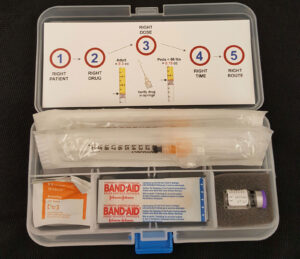
Calhoun County Medical Control Authority is now authorizing MFR and Basic EMTs to administer Epinephrine via Intermuscular Injection, with approval from the CCMCA. Below you will find resources to complete the necessary training.
- Watch CCMCA Training Video or Complete department training using the provided PowerPoint.
- Complete skills training and evaluation using the CCMCA IM Epinephrine Injection Skill Sheet
- Complete the online quiz with a score of 70% or higher (paper quiz also provided)
- Submit Training records to [email protected]
- Training is good for one calendar year from the time of completion
Training Resources
- Intermuscular Epinephrine Injection Training - Video Lecture
- CCMCA Training Roster - 2023
- CCMCA Training Evaluation - 2023
- Intermuscular Epinephrine Injection Training - PowerPoint File
- Intermuscular Epinephrine Injection Training Skill Sheet
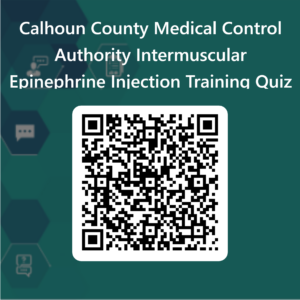
- Intermuscular Epinephrine Injection Training - Online Quiz (preferred)
- Intermuscular Epinephrine Injection Training - Paper Quiz
- Intermuscular Epinephrine Injection Training - Skill Video - TBD
Please contact Clark Imus at [email protected] for any questions.
Career Pathway Maps
- Associate in Elementary Education
- Associate of Applied Science in Early Childhood Education
- Associate of Applied Science in Early Childhood Education – ONLINE
Transfer Pathway Maps
Can’t find a specific pathway map? Contact Academic Advising for assistance in customizing pathways based on your individual educational goals.
EARLY CHILDHOOD EDUCATION
Early childhood education is a fascinating and dynamic field that focuses on children’s growth and development between the ages of birth and age 8. KCC’s ECE Program trains students to meet the state of Michigan’s Child Care Licensing Regulations for child care providers, federal mandates for Head Start teaching staff and the Michigan Department of Education Great Start Readiness training guidelines for preschool paraprofessionals. Full and part-time programs are available.
KCC offers an Associate in Applied Science degree in Early Childhood Education as well as Child Development Associate (CDA) training. For more information about KCC’s Early Childhood Education Program, see:
- Associate of Applied Science in Early Childhood Education
- Associate of Applied Science in Early Childhood Education – ONLINE
- Early Childhood Education (ECE) course descriptions
- Early Childhood Education Brochure
- Early Childhood Education Program Information Guidelines
- Early Childhood Education Central Abuse and Neglect FAQs
- Early Childhood Education Internships
ELEMENTARY & SECONDARY EDUCATION
Public school teachers must have at least a bachelor’s degree, complete an approved teacher education program and be licensed by the state of Michigan. KCC’s Elementary and Secondary Education Program has partnered with several bachelor’s-degree granting institutions to facilitate a smooth transition for students. At the community college level, students interested in earning a bachelor’s degree in either elementary or secondary education should follow the transfer guide for the institution they intend to enter at the junior class level.
KCC offers a two-year Associate of Elementary Education degree for students focused on elementary education and an Associate in Arts degree for students focused on secondary education.
Associate of Elementary Education
KCC’s Associate of Elementary Education students earn approximately half the credits toward a four-year bachelor’s degree at KCC and complete the remaining courses required through a university. Elementary Education students at KCC follow a clearly defined degree path by following an articulation guide tailored to each student’s bachelor’s-degree granting institution of choice.
Associate in Arts Degree
For students with a focus on secondary education, there are many benefits to earning an Associate in Arts degree on the way to completing a bachelor’s degree. Benefits include more job opportunities, increased income earning potential and the opportunity to work in an education setting to gain valuable experience while completing training requirements to become a state-licensed teacher.
CDA TRAINING
The Child Development Associate (CDA) is a credential awarded by the Council for Professional Recognition. A CDA credential recognizes skills of early childhood caregivers and education professionals. It is designed for individuals who have work experience in child care settings.
KCC provides classes for academic credit which may be used toward the completion of CDA. These classes may also be applied toward the completion of an Associate in Applied Science degree in Early Childhood Education.
The Benefits of CDA Credential
- Advance your career
- Meet job requirements
- Reinforce your commitment to early childhood education
- Provide parents with peace of mind
- Understand developmentally appropriate practice
- Increase your confidence
- Meet licensing requirements
Individuals interested in starting CDA training at KCC should contact KCC’s Early Childhood and Teacher Education Office at 269-565-2109 to arrange an appointment with a program advisor. The advisor will guide each student individually prior to registration.
Prospective CDA trainees should also contact the Council for Professional Recognition at 800-424-4310 to request a direct assessment packet before beginning their training.
Advising & Transfer
View transfer guides outlining opportunities for students looking to transfer their KCC credits to a four-year institution. Contact Academic Advising at 269-965-4124 or [email protected] to schedule an appointment to plot a personal transfer plan or contact KCC’s Early Childhood and Teacher Education Department at 269-565-2109.

APPLY NOW
New students must log in to the application system using a Facebook or Google account.


Current or returning students should log in using their K-ID.

Arts, Communication
& English
Business & Computer
Information Technology
Early Childhood
& Teacher Education
Health Sciences
Manufacturing, Skilled Trades &
Applied Technology
Science, Mathematics & Engineering
Social Science, Human Services & Criminal Justice
Transfer Studies